

Starting a business in the Philippines can feel overwhelming, especially if it’s your first time. With multiple government agencies, documents, and procedures to navigate, it’s easy to feel lost or make mistakes that could delay your business launch.
Here are some common challenges beginners face:
- Confusing which business type to register: sole proprietorship, partnership, corporation, or OPC
- Navigating multiple authorities: DTI, SEC, BIR, Barangay, and LGU
- Missing required documents or permits, leading to delays or rejections
- Unexpected fees or compliance requirements that aren’t clear upfront
But it doesn’t have to be complicated. In this step-by-step guide, we’ll walk you through everything you need to know to register your business in the Philippines—from choosing the right business type and preparing documents to completing the registration process—so you can start your business legally, confidently, and ready to grow.
Understanding Business Registration in the Philippines
Before you start registering your business, it’s important to know which government authorities handle different parts of the process. Each agency plays a specific role, and understanding this can help you avoid delays or mistakes.

Handles business name registration for sole proprietorships. They ensure your chosen business name is unique and legally recognized.

Responsible for registering corporations, partnerships, and One Person Corporations (OPC). SEC ensures your business is legally structured and compliant with corporate regulations.

Manages tax registration and ensures your business can issue official receipts, pay taxes, and obtain a Tax Identification Number (TIN).

Required if you plan to hire employees, so your staff can be enrolled in social security, health insurance, and housing benefits programs.
Barangay Office
Issues the Barangay Clearance, which allows your business to operate within a specific barangay and ensures compliance with local community regulations.
Local Government Unit (LGU) / Mayor’s Office
Grants the Mayor’s Permit / Business Permit, which legally authorizes your business to operate within the city or municipality.
Why Must You Register a Business in the Philippines?

Registering your business is a crucial step to operate legally, protect your interests, and build trust with customers and partners. Without proper registration, your business may face penalties, rejected transactions, or even closure.
Key reasons to register include:
- Legally operate your business and avoid fines or sanctions
- Issue official receipts to customers and ensure proper tax compliance
- Sign contracts, leases, or agreements legally under your business entity
- Hire employees legally
- Open a business bank account or access financing
Types of Business You Can Register in Philippines

Choosing the right business structure is important because it affects your registration process, legal obligations, taxes, and liability. Here’s a breakdown of the main business types:
1. Sole Proprietorship
- Owned and managed by one individual.
- The owner has full control but is personally liable for business debts.
- Suitable for small businesses, freelancers, or home-based businesses.
- Registered with DTI.
2. Partnership
- Owned by two or more partners who share profits, losses, and responsibilities.
- Requires a partnership agreement outlining contributions, responsibilities, and profit sharing.
- Each partner is personally liable for business obligations unless structured otherwise.
- Registered with SEC.
3. One Person Corporation (OPC)
- Owned by a single person, combining the simplicity of a sole proprietorship with corporate benefits.
- Provides limited liability, protecting personal assets.
- Suitable for solo entrepreneurs like digital consultants, designers, independent professionals.
- Registered via SEC eSPARC.
4. Domestic Corporation
- Owned by 2–15 incorporators.
- Ideal for larger businesses, SMEs, or those planning to raise capital.
- Provides limited liability to protect shareholders’ personal assets.
- Requires articles of incorporation, bylaws, and initial capital.
- Registered with SEC.
- More compliance obligations, such as annual reports and corporate governance.
5. Foreign-Owned Corporation
- Includes Branch Office, Representative Office, ROHQ, or Domestic Corporation with foreign equity.
- Suitable for international companies expanding operations in the Philippines.
- Requires higher capital and compliance with foreign investment rules.
- Registered with SEC and may need special approvals depending on the type.
Required Documents for DTI & SEC Registration
Eligibility to register with SSM depends on factors such as age, citizenship, and business structure. Knowing whether you qualify helps avoid delays and ensures a smoother registration process.
| Registration | Document | Description |
DTI (Sole Proprietorship) | Valid Government ID | Any government-issued ID of the owner |
| Proposed Business Name | The name you want to register | |
| Business Address Proof | Lease contract or property title verifying your business location | |
SEC (Partnership, Corporation, OPC) | Articles of Incorporation | Defines ownership, structure, and purpose of the company |
| By-laws | Outlines rules for company governance and operations | |
| Treasurer’s Affidavit | Confirms paid-up capital and financial commitment | |
| Name Reservation Confirmation | Proof that the proposed business name is approved by SEC | |
| Business Address Proof | Lease contract or land title verifying your business location | |
| Valid IDs & TIN | For all incorporators, directors, and authorized representatives | |
| Cover Sheet | Official SEC filing form required for registration | |
| Notarized Registration Forms | Legal forms authorizing the company registration | |
| Apostilled / Authenticated Documents | Required for foreign investors or foreign-owned corporations |
Who are Eligible to Register Business in Philippines?

Not everyone can register a business, so it’s important to understand the eligibility requirements:
- Must be at least 18 years old
- Must be legally capable of entering contracts; undischarged bankrupts or individuals under legal incapacity are ineligible
- Citizenship:
- Filipino Citizens: Can register any type of business (sole proprietorship, partnership, corporation, or OPC)
- Foreign Nationals: Can register businesses subject to restrictions, usually requiring:
- Appointment of at least one Filipino partner or local resident director (for corporations/OPCs)
- Compliance with foreign ownership rules and special approvals
- Industry-Specific Requirements: Some sectors may require licenses, permits, or professional qualifications
💡Tip: Foreigners should check government rules carefully and may need assistance from professional filing agents to comply with regulations
Business Types & Registration Overview
To help you quickly understand the differences, the table below summarizes the types of businesses you can register in the Philippines, where to register, required documents, eligibility, key notes, and suitable use cases. This makes it easier to identify the structure that best fits your needs before starting registration.
| Business Type | Who Can Register | Keynote | Required Documents | Suitable For |
| Sole Proprietorship (DTI) | Filipino citizens | Simple, low-cost, no liability protection | Valid government ID, Proposed business name, Proof of business address (if requested) | Freelancers, online sellers, micro-businesses, home-based businesses |
| Partnership (SEC) | Filipino citizens | 2 or more partners share profits and liabilities | Articles of Partnership, Name Reservation Confirmation, Business Address Proof, Valid IDs & TIN, Notarized Registration Forms | Legal firms, consultancies, professional services |
| One Person Corporation (OPC) (SEC) | Filipino citizens | Full corporate protection with just 1 owner | Articles of Incorporation, By-laws, Treasurer’s Affidavit, Name Reservation Confirmation, Business Address Proof, Valid IDs & TIN, Cover Sheet, Notarized Registration Forms | Digital consultants, designers, independent professionals wanting corporate legitimacy |
| Domestic Corporation (SEC) | Filipino citizens | Requires 2–15 incorporators, limited liability protection | Articles of Incorporation, By-laws, Treasurer’s Affidavit, Name Reservation Confirmation, Business Address Proof, Valid IDs & TIN, Cover Sheet, Notarized Registration Forms | SMEs, startups, BPOs, IT firms, service companies, import/export businesses |
| Foreign-Owned Corporation (SEC) | Foreign investors with local compliance | Requires higher capital, foreign investment compliance | Articles of Incorporation, By-laws, Treasurer’s Affidavit, Name Reservation Confirmation, Business Address Proof, Valid IDs & TIN, Cover Sheet, Notarized Registration Forms, Apostilled / Authenticated Documents | International companies expanding operations in the Philippines |
How to Register Business in Philippines
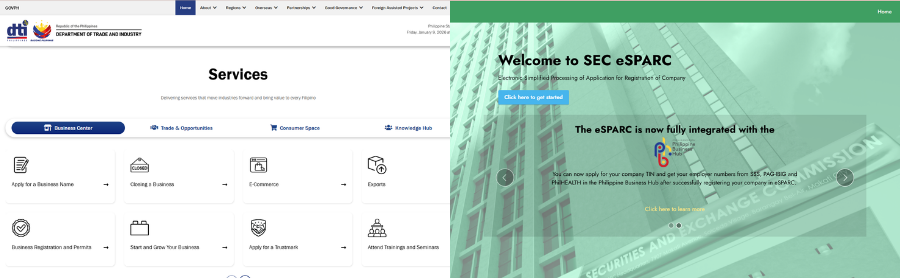
Registering your business properly ensures that you can operate legally, pay taxes, and protect your business and employees. Follow these steps to get started:
Step 1: Register Your Business Name
This is the first and most important step, as your business name must be officially registered before applying for other permits.
- Authority:
- Sole Proprietorship: Department of Trade and Industry (DTI)
- Partnership, Corporation, OPC: Securities and Exchange Commission (SEC)
- Can register online via SEC eSPARC (Electronic Simplified Processing of Application for Registration of Companies)
Three Main SEC Regustration Platforms:
| SEC Platform | Use |
| CRS | For One Person Corporation, Partnership, or Domestic Corporation |
| ESS | Electronic submission of uploaded documents |
| OST | For annual reports and post-registration submissions |
- Documents Required:
- Valid government ID
- Proposed business name
- Articles of Partnership/Incorporation and bylaws (for partnerships/corporations)
- Estimated Cost: ₱200–₱5,000 (depends on business type and scope)
💡Tip: Check online to ensure your business name is unique. Keep a copy of your DTI or SEC certificate—you’ll need it for permits, BIR registration, and other compliance steps.
Step 2: Get Barangay Clearance
After securing your business name, you must obtain approval from the Barangay where your business is located.
- Authority: Local Barangay Office
- Documents Required:
- Business Name Certificate (DTI/SEC)
- Valid ID
- Proof of business address (lease or property title)
- Estimated Cost: ₱300–₱1,000 (varies by Barangay)
💡Tip: Some Barangays offer online applications. Some Barangays may require a site inspection.
Step 3: Obtain Mayor’s Permit / Business Permit
Once the Barangay approves your business, you need a Mayor’s Permit from the local government to legally operate within your city or municipality and is required before you can open a business bank account or start commercial activities.
- Authority: Local Government Unit (LGU) / City or Municipality Hall
- Documents Required:
- Barangay Clearance
- DTI/SEC Certificate
- Lease agreement or property title
- Valid IDs of owner/partners
- Sketch of business location
- Estimated Cost: ₱1,000–₱5,000 (varies depending on business type and location)
💡Tip: Some LGUs offer online filing and renewal for permits.
Step 4: Register with BIR (Tax Compliance)
With local permits secured, the next step is registering with the Bureau of Internal Revenue (BIR) to handle taxes legally.
During this step, you will either register for a new Tax Identification Number (TIN) (if your business doesn’t have one) or update your existing TIN to link it with your new business.
- Authority: BIR
- Documents Required:
- DTI/SEC Certificate
- Mayor’s Permit
- Valid ID
- Books of Accounts
- Estimated Cost: ₱500–₱1,000
💡Tip: Keep all receipts and documents organized. Correct TIN registration at this stage ensures smooth tax compliance and avoids penalties later.
Step 5: Register Employees (If Applicable)
If you hire employees, you must register your business with government agencies for employee benefits and contributions.
- Authority:
- SSS (Social Security System)
- PhilHealth
- Pag-IBIG Fund
- Documents Required:
- Employer registration forms
- Business registration certificate (DTI/SEC, Mayor’s Permit)
- Estimated Cost: Free (contributions depend on employee salaries)
💡Tip: Registering early ensures smooth compliance when hiring staff.
Step 6: Apply for Special Permits / Licenses (If Applicable)
Special permits depend on your business type and location. Failing to secure these permits can lead to fines or closure.
- Authority: Depends on your industry (Health Office, LTFRB, BOC, etc.)
- Documents Required: Industry-specific; e.g.,
- Food businesses → Sanitary Permit
- Transport companies → LTFRB accreditation
- Import/export → BOC clearance
💡Tip: Verify requirements before starting operations to avoid fines or delays.
Step 7: Prepare for Fees and Annual Renewals
After completing registration, it’s important to stay compliant with annual renewals.
- Mayor’s Permit, Barangay Clearance, and BIR registration must be renewed yearly
- Prepare a budget for recurring compliance fees
- Keep a renewal calendar to avoid penalties
💡Tip: Keeping a calendar for renewals helps prevent penalties and ensures your business remains compliant.
📌Note: Fees and requirements may vary depending on location and business type. Always confirm with local authorities before applying.
Simplify Business Operations with SiteGiant
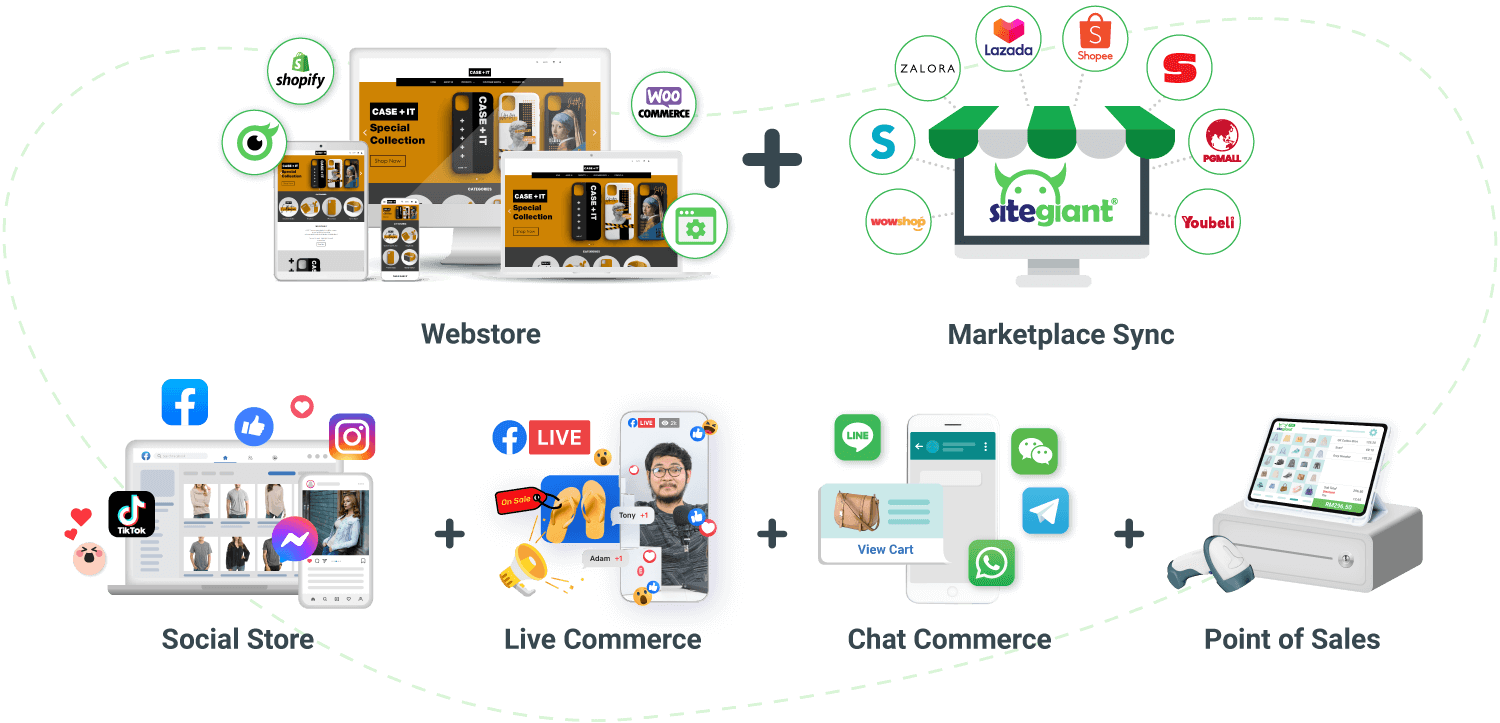
After registering your business, managing orders, inventory, and sales across multiple platforms can still be challenging. Handling everything manually can be time-consuming and prone to errors.
Tools like SiteGiant help Filipino SMEs streamline daily operations and focus on growing their business. Here’s how SiteGiant supports new business owners after business registration:
- Order Management: Track and manage orders from Shopee, Lazada, TikTok Shop, and your online store in one dashboard. Update order statuses, manage returns, and reduce errors without logging into multiple platforms.
- Inventory Management: Sync inventory across all sales channels, perform stock adjustments, manage warehouse racks, and forecast inventory all in one place. SiteGiant ensures your stock levels are always accurate and up-to-date, preventing overselling and simplifying warehouse management.
- Multi-Channel Selling: Sync products across multiple eCommerce channels seamlessly. This means listing updates, pricing, and promotions are reflected across all platforms without manual work, saving time and avoiding mistakes.
- Logistics & Payment Integration: Manage your logistics and payment processes efficiently. SiteGiant supports popular courier services and payment gateways, helping you track shipments, process payments securely, and reduce operational errors.
- Reporting & Insights: Access detailed reports on sales, inventory, and store performance. This helps business owners make informed decisions, identify trends, and plan for growth.
With tools like SiteGiant, new business owners can focus on expanding their business, improving customer experience, and scaling with confidence—without being weighed down by day-to-day operational tasks.
Frequently Asked Questions (FAQ)
How long does business registration take in the Philippines?
Processing time depends on your business type and completeness of your documents. Sole proprietorships are usually approved on the same day, while partnerships, corporations, or OPCs may take around 1–5 business days.
Do I need a bank account before registering my business?
No. You can open a corporate bank account after competing business registration. However, having one is essential for managing payments, expenses, and business transactions efficiently.
Can foreigners register a business without a Filipino partner or local director?
No. Foreigners must appoint a Filipino partner or local resident director, depending on the business structure and ownership restrictions.
Can I change my business name after registration?
Yes. You can apply for a business name change through the DTI (for sole proprietorships) or SEC (for partnership/corporation), subject to approval and applicable fees.
How can I manage my business operations efficiently after registration?
Tools like SiteGiant help new business owners manage orders, inventory, multi-channel selling, and payments from a single platform. This reduces manual work and errors, allowing you to focus on growing your business.
Conclusion
Registering your business with DTI or SEC is the first step to building a legal, credible, and growth-ready business in the Philippines. It allows you to open corporate bank accounts, access government support, and gain customer trust — giving your business a strong foundation to grow.
However, registration is just the beginning. As your business grows, managing orders, inventory, and sales across multiple platforms can quickly become complex. SiteGiant simplifies this process with an all-in-one platform that helps you streamline operations, reduce errors, and save time—so you can focus on what matters most: growing your business.
👉Start streamlining your business today with SiteGiant — reduce errors, improve efficiency, and focus on growing your business with confidence!