
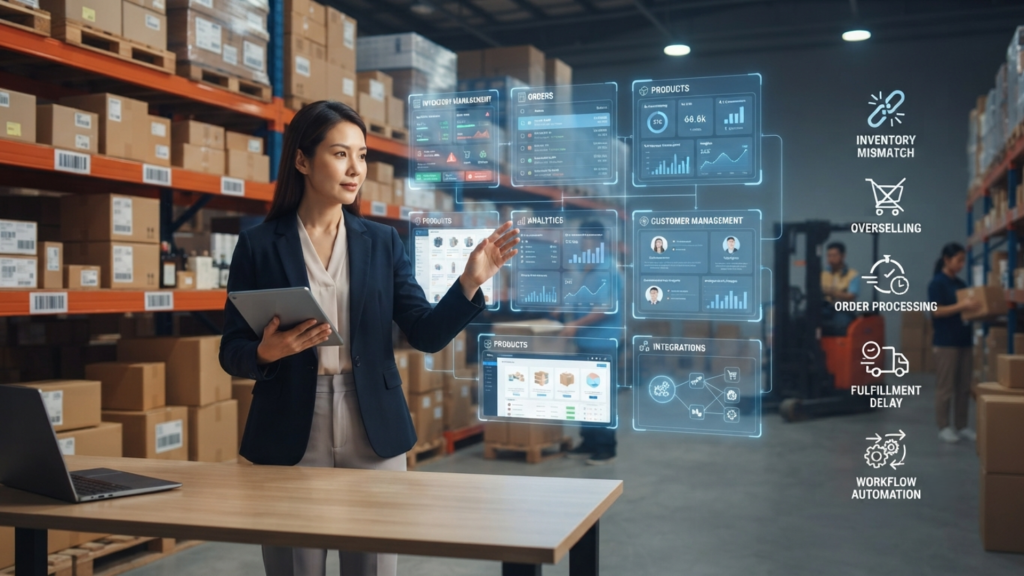
As ecommerce businesses grow, managing daily operations becomes far more complicated than simply receiving more orders. Many sellers start by managing inventory, orders, products, and customer enquiries manually across different marketplaces. While this may work during the early stages of business, manual workflows often become increasingly difficult to manage as operations expand. As businesses begin selling across Shopee, Lazada, TikTok Shop, Zalora, webstores, POS systems, and other sales channels, operational complexity increases significantly.
Without a centralized ecommerce management system, sellers often experience:
- Inventory mismatch
- Overselling
- Slow order processing
- Repetitive manual work
- Poor inventory visibility
- Fulfillment delays
- Increasing operational workload
These operational challenges are often signs that a business has outgrown manual management.
Instead of relying on spreadsheets and disconnected systems, many ecommerce businesses are adopting ecommerce ERP systems to centralize operations, automate repetitive workflows, and improve operational efficiency.
In this article, we’ll explore five common signs that indicate your ecommerce business may be ready for an ecommerce ERP system and how centralized automation can help support long-term business growth.
How To Know Your eCommerce Business Needs A System?

Sign 1: You're Selling on Multiple Sales Channels
As your ecommerce business expands across Shopee, Lazada, TikTok Shop, Zalora, webstores, POS systems, and other sales channels, managing operations separately on each platform becomes increasingly difficult. Staff often need to log in to multiple systems throughout the day to update products, monitor orders, and coordinate inventory manually. This not only creates repetitive work but also increases the risk of inconsistent product information and operational errors.
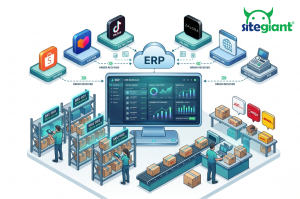
A centralized ecommerce ERP system helps simplify multichannel operations by bringing orders, products, inventory, and backend activities into one connected platform. Instead of switching between multiple systems, businesses can manage their ecommerce operations more efficiently while maintaining better visibility across all sales channels.
Sign 2: Inventory Is Becoming Difficult to Manage
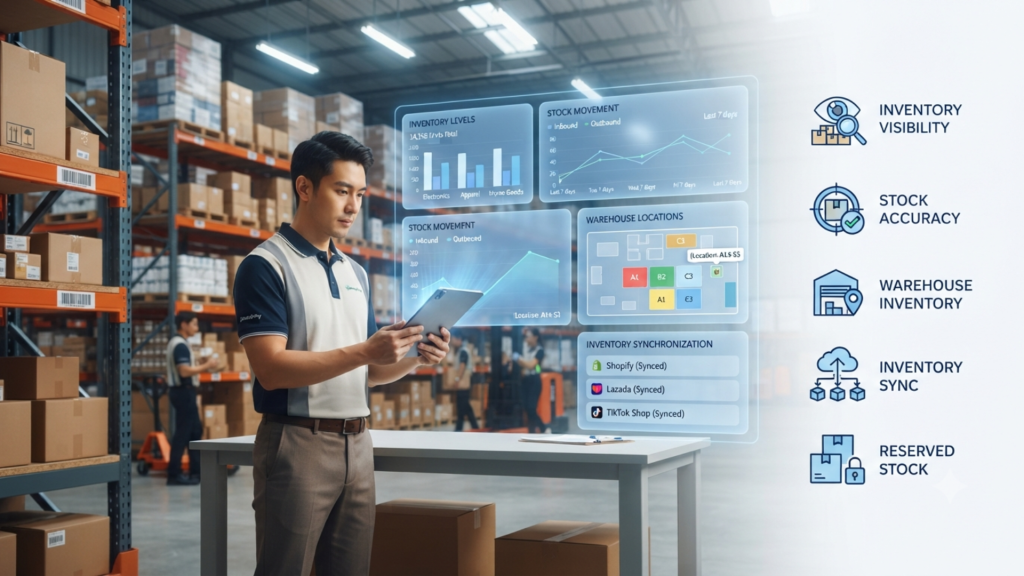
As product catalogs grow and businesses expand across multiple warehouses and sales channels, maintaining accurate inventory manually becomes increasingly challenging. Stock quantities change constantly throughout the day, making it difficult to keep inventory synchronized across different platforms. Without centralized inventory management, businesses may experience inventory mismatches, stock inconsistencies, overselling, and limited visibility into available inventory.
An ecommerce ERP system helps centralize inventory management by providing synchronized inventory updates and improved inventory visibility across connected sales channels. This allows businesses to manage stock more accurately while reducing manual coordination and inventory-related operational issues.
Sign 3: Your Team Spends Too Much Time Processing Orders
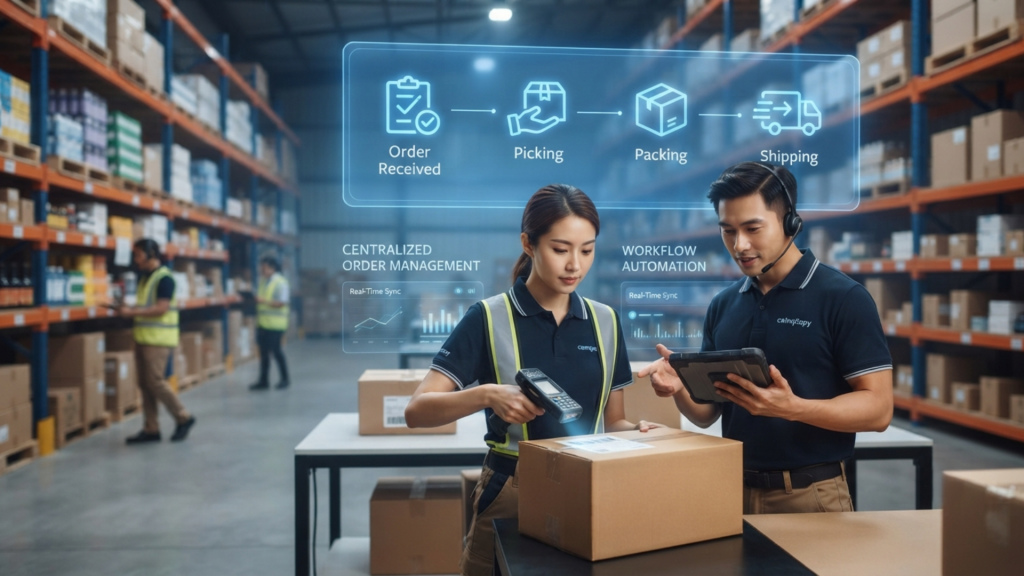
As daily order volume continues to increase, manual order processing can quickly become one of the biggest operational bottlenecks. Staff may need to check multiple marketplaces, download orders separately, prepare shipping documents, and coordinate fulfillment manually before every shipment. These repetitive processes consume valuable time and increase the likelihood of processing delays, shipping mistakes, and fulfillment errors.
An ecommerce ERP system helps centralize order management by synchronizing orders from multiple sales channels into one connected system. With better order visibility and streamlined operational workflows, businesses can process orders more efficiently while reducing manual workload and improving overall fulfillment efficiency.

Sign 4: Manual Work Is Slowing Down Your Business
Many growing ecommerce businesses continue relying on manual processes to update products, manage inventory, reconcile payments, generate reports, and coordinate daily operations. While these tasks may seem manageable initially, they often become increasingly time-consuming as the business grows. Repetitive manual work can also increase staff dependency, operational bottlenecks, and overall labour costs.
An ecommerce ERP system helps automate repetitive backend processes and centralize operational management into one platform. By reducing manual tasks and standardizing workflows, businesses can improve productivity, streamline daily operations, and allow their teams to focus on higher-value activities that support business growth.
Without an efficient order management system, businesses may experience processing delays, fulfillment bottlenecks, and slower shipping preparation during peak sales periods.

Sign5:You Find It Difficult to Scales Your Business
As your ecommerce business continues to grow, managing more products, orders, staff, and sales channels becomes significantly more complex. Without standardized operational processes, businesses often struggle with inconsistent workflows, limited operational visibility, and inefficient coordination between teams. At the same time, many ecommerce marketplaces are introducing stricter performance requirements, including next-day delivery expectations, faster chat response rates, and lower late shipment rates. Businesses relying heavily on manual operations may find it increasingly difficult to meet these service standards consistently.
An ecommerce ERP system helps support business scalability by standardizing workflows, centralizing operational visibility, and providing better reporting and analytics. With more organized backend operations and improved coordination across teams, businesses are better equipped to handle increasing order volumes while maintaining operational efficiency and delivering a consistent customer experience.
Why Growing Ecommerce Businesses Choose ERP?
-1024x576.png)
As ecommerce operations become more complex, managing products, inventory, orders, customers, reporting, and multiple business systems separately can significantly reduce operational efficiency. Switching between different platforms and relying on manual coordination not only consumes valuable time but also increases the risk of errors and inconsistent workflows.
An ecommerce ERP system centralizes these operational activities into one connected platform, allowing businesses to manage their backend processes more efficiently. With centralized order management, real-time inventory updates, product management, analytics and reporting, customer management, payment reconciliation, and integrations with multiple ecommerce platforms and business tools, businesses can improve productivity, reduce manual workload, maintain better operational visibility, and build a stronger foundation for long-term business growth.
1. Delayed Fulfillment
Orders take longer to move through fulfillment workflows when processing activities are delayed. This can affect warehouse coordination, picking efficiency, packing preparation, and shipment readiness.
2. Shipping Delays
When order processing slows down, shipment preparation is often delayed as well. Customers may need to wait longer before receiving shipment notifications and tracking information, affecting their overall shopping experience.
3. Increased Operational Costs
Manual workflows often require additional manpower to handle repetitive tasks. As order volume grows, businesses may need to allocate more resources to maintain operational performance, increasing overall operational costs.
4. Higher Risk of Human Errors
The more manual processes involved, the higher the likelihood of mistakes. Order processing errors, fulfillment discrepancies, and incorrect shipment preparation can occur when staff are required to handle large volumes of orders manually.
5. Reduced Customer Satisfaction
Customers expect fast and reliable order fulfillment. When processing delays occur frequently, businesses may find it more difficult to maintain customer satisfaction and deliver a consistent buying experience.
How SiteGiant ERP Helps Growing Ecommerce Businesses?
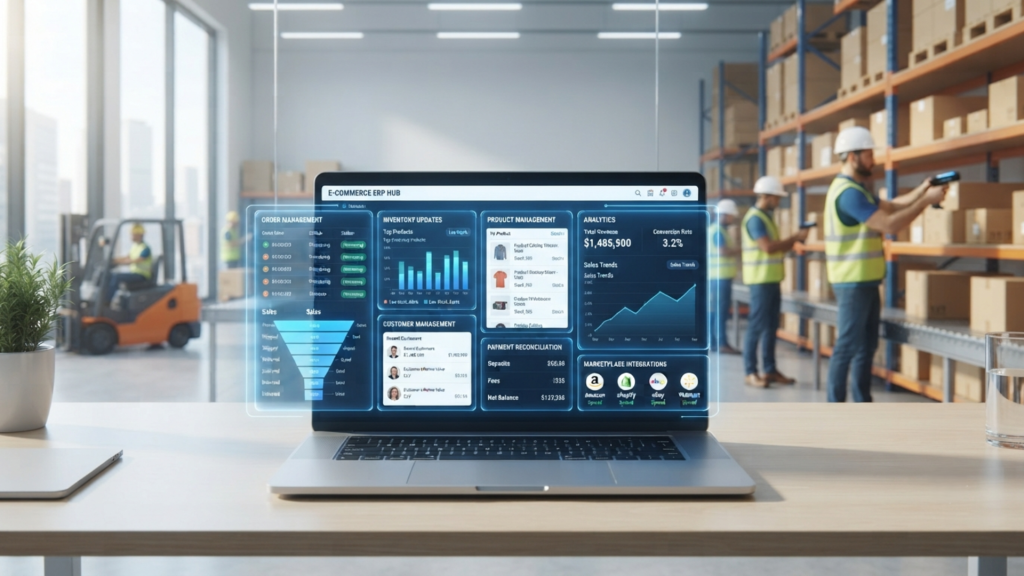
SiteGiant ERP is designed to help ecommerce businesses manage multichannel operations through one centralized platform. Instead of relying on separate systems for inventory, orders, products, reporting, and customer management, businesses can streamline their daily operations while improving operational visibility and overall efficiency.
1. Centralized Order Management
Manage orders from multiple ecommerce marketplaces and sales channels through one centralized system. This helps reduce manual coordination, improves order visibility, and simplifies order processing across your business.
2. Real-time Inventory Updates
Keep inventory synchronized across connected sales channels to improve inventory accuracy and reduce stock inconsistencies. Better inventory visibility also helps businesses manage stock movement more efficiently as order volume grows.
3. Product Management
Manage products, variations, and product information across multiple sales channels through one connected platform. This helps reduce repetitive updates while maintaining more consistent product information across marketplaces.
4. Analytics & Reporting
Access centralized business reports and operational insights through one system. Better reporting helps businesses monitor sales performance, inventory movement, and operational activities more efficiently for informed decision-making.
5. Customer Management
Manage customer information and enquiries through one centralized platform. This allows businesses to maintain better customer visibility while supporting more efficient day-to-day operations.
6. Payment Reconciliation
Simplify payment reconciliation by managing transaction records through one connected backend system. This helps reduce manual checking while improving operational accuracy.
7. 50+ Integrations
Connect with major ecommerce marketplaces, webstores, POS systems, courier services, accounting software, and other business tools through SiteGiant’s integrated ecosystem. Centralized integrations help reduce disconnected workflows and improve operational efficiency across your ecommerce business.
Frequently Asked Questions (FAQ)
What are the signs that my ecommerce business needs an ERP system?
If your business is experiencing inventory mismatches, slow order processing, repetitive manual tasks, fulfillment delays, or difficulty managing multiple sales channels, it may be time to consider an ecommerce ERP system. As your business grows, an ERP system helps centralize operations and improve overall efficiency.
When should a small ecommerce business implement an ERP system?
A small ecommerce business should consider implementing an ERP system when manual workflows begin affecting productivity. Common signs include increasing order volume, expanding to multiple sales channels, growing product catalogs, and spending too much time on repetitive operational tasks.
Can an ecommerce ERP system reduce manual work?
Yes. An ecommerce ERP system helps automate many repetitive backend processes, such as order synchronization, inventory updates, product management, and operational workflows. This reduces manual coordination and allows teams to focus on higher-value business activities.
How does ERP improve inventory management
An ecommerce ERP system improves inventory management by providing centralized inventory visibility and synchronized stock updates across connected sales channels. This helps businesses maintain more accurate inventory records, reduce stock inconsistencies, and improve inventory coordination.
Is an ERP system useful for multichannel ecommerce sellers?
Yes. Businesses selling across platforms such as Shopee, Lazada, TikTok Shop, Zalora, webstores, and POS systems can use an ecommerce ERP system to centralize operations through one connected platform. This simplifies multichannel management and improves operational visibility.
How does an ERP system improve business efficiency?
An ecommerce ERP system improves business efficiency by centralizing inventory, orders, products, reporting, and other operational processes into one system. By reducing repetitive manual tasks and improving workflow coordination, businesses can operate more efficiently as they grow.
Can an ecommerce ERP system support business growth?
Yes. As order volume, product catalogs, and sales channels increase, an ecommerce ERP system helps businesses standardize workflows, improve operational visibility, and manage growing operations more effectively. This provides a stronger foundation for long-term business scalability.
Conclusion

As ecommerce businesses continue growing, manual workflows often become more difficult to manage efficiently. What may have worked during the early stages of business can eventually lead to operational bottlenecks, inventory issues, fulfillment delays, and reduced productivity.
Recognizing these signs early allows businesses to adopt the right systems before operational challenges begin affecting customer experience and business growth.
With centralized order management, real-time inventory updates, multichannel integration, analytics, and workflow automation, SiteGiant ERP helps ecommerce businesses streamline operations and build a more scalable foundation for long-term growth.