
For many Philippines businesses, building an online presence is no longer just about having a website. As more consumers shop online and expect a seamless digital shopping experience, having a dedicated webstore has become an essential part of running a successful business. A webstore not only allows businesses to showcase their products and strengthen their brand identity but also provides customers with a convenient way to browse, purchase, and interact with the business anytime and anywhere.
However, choosing the right webstore platform can be challenging, especially for growing businesses. Many SMEs face difficulties such as:
- Multichannel complexity – Managing products, inventory, and orders across multiple sales channels
- Stock sync issues – Keeping stock levels updated between their webstore, Shopee, Lazada, and TikTok Shop
- Manual workload – Spending too much time on manual processes and repetitive updates
- Ease of use vs. scalability – Finding a platform that is easy to use while still supporting business growth
- Decision overwhelm – Choosing between different platforms with various features, integrations, and pricing options
Without the right system, businesses may experience inventory errors, inefficient workflows, and difficulties scaling their online operations.
A webstore platform should do more than just display products online. Modern businesses need a solution that helps simplify operations, connect different sales channels, and provide better control over their online selling activities.
In this article, we will explore the 10 best platforms to create a webstore in Philippines, compare their strengths and limitations, and highlight the key factors businesses should consider when choosing the right platform. Whether you are starting a new online store or looking to improve your current eCommerce operations, this guide will help you find a platform that matches your business needs.
What is a Webstore?

A webstore is an online platform that allows businesses to sell products or services directly through their own website. Unlike traditional websites that only showcase products, modern webstores provide businesses with tools to manage online sales, product information, customer orders, payments, and daily operations more efficiently.
For growing businesses, a webstore also acts as a central platform that supports better control over online selling activities. When integrated with other sales channels such as marketplaces and social commerce platforms, businesses can manage their operations more effectively while creating a smoother shopping experience for customers.
Benefits of a Webstore for Businesses
- Build their own online presence and reduce reliance on third-party marketplaces
- Sell with zero marketplace commission fees
- Manage products, orders, and customer information more efficiently in one place
- Own and manage customer data directly
- Provide a smoother buying experience with better checkout and payment options
- Connect with multiple sales channels for easier business management
- Support long-term growth with better automation and system integration
How to Choose the Best Webstore Platform?
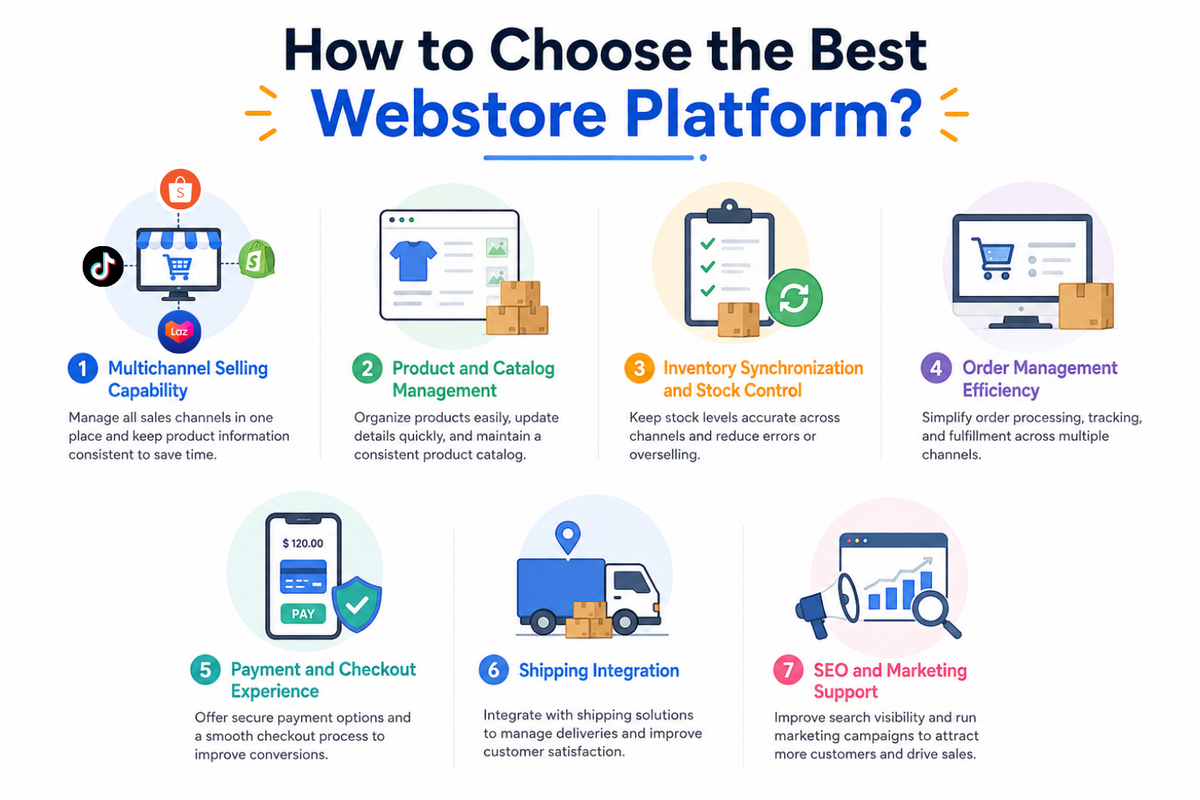
Choosing the right webstore platform is not only about creating an online store. Businesses should consider whether the platform can support daily operations, connect with different sales channels, improve the overall customer experience, and adapt as the business continues to grow. By understanding the key features and capabilities of each platform, businesses can make a more informed decision and choose a solution that best fits their operational needs and long-term goal
Before making a decision, consider these important factors:
1. Multichannel Selling Capability
Many businesses today sell through different channels, including their own webstore, marketplaces, and social media platforms. A good webstore platform should help businesses manage these channels more efficiently and reduce the need to handle each platform separately. This helps businesses save time and maintain more consistent product information across all channels.
2. Product and Catalog Management
Managing product information becomes more challenging as a business expands its product range. Businesses should look for platforms that make it easier to organize products, update product details, and maintain a consistent product catalog.
3. Inventory Synchronization and Stock Control
Accurate inventory management is important for maintaining smooth operations. A suitable platform should provide better visibility of stock levels across different sales channels and reduce manual updates that may lead to stock errors or overselling issues.
4. Order Management Efficiency
As order volume increases, managing orders manually can become time-consuming. A good webstore platform should simplify order processing across multiple channels and help businesses handle order tracking and fulfillment more efficiently.
5. Payment and Checkout Experience
A smooth checkout experience can influence whether customers complete their purchases. Businesses should consider whether the platform supports reliable payment options and creates a convenient buying process for customers.
6. Shipping Integration
Shipping plays an important role in overall customer experience. A suitable platform should work well with shipping solutions to help businesses manage deliveries and improve order fulfillment.
7. SEO and Marketing Support
A webstore should support both selling and customer acquisition. Features that improve search visibility and support marketing activities can help businesses attract more customers and encourage repeat purchases.
10 Best Platforms to Create a Webstore in Philippines
1. SiteGiant
SiteGiant is built specifically for Philippines SMEs. It combines webstore management with multichannel selling capabilities across Shopee, Lazada, TikTok Shop, and other sales channels. It allows businesses to manage products, inventory, and orders from one centralized platform, helping sellers reduce manual work, improve operational efficiency, and scale their online business more effectively.

2. Shopify
A globally recognized eCommerce platform, Shopify helps businesses create professional online stores with customizable themes, payment integrations, and a wide range of apps. It is suitable for businesses looking for an easy-to-use platform with strong ecosystem support, although additional apps may be required for more advanced functions.

3. WooCommerce
An open-source eCommerce solution built for WordPress websites, WooCommerce offers businesses a high level of flexibility and customization. It allows merchants to control their website design, features, and integrations, but requires more technical knowledge for setup, maintenance, and optimization.
4. Shopline
Focused on online retail and social commerce, Shopline helps brands create webstores, manage products, and engage customers through marketing features. It is suitable for businesses that focus on building online brand experiences, but may be less suitable for businesses with complex backend operational requirements.

5. Wix
A beginner-friendly website builder with eCommerce capabilities, Wix allows businesses to create online stores through a simple drag-and-drop interface. It is a good option for small businesses that prioritize design and ease of use, but it may not provide advanced eCommerce management features for larger operations.

6. Squarespace
Known for its modern website designs and strong visual branding capabilities, Squarespace allows businesses to create attractive online stores with a focus on customer experience. It is suitable for creative brands and small businesses, although its eCommerce features may be more limited compared to dedicated eCommerce platforms.

7. BigCommerce
A scalable eCommerce platform designed for growing businesses, BigCommerce provides built-in tools for product management, SEO, payments, and multichannel selling. It is suitable for businesses that require stronger eCommerce capabilities, but its features may be more complex for beginners.

8. Magento
An open-source eCommerce platform known for its powerful customization capabilities, Magento is commonly used by businesses with complex eCommerce requirements. It provides extensive flexibility and control over online stores, but requires significant technical resources and development expertise to manage.
9. Hostinger Website Builder
Hostinger Website Builder is an easy-to-use website builder that allows businesses to create professional webstores without coding knowledge. It provides built-in eCommerce tools for small and growing businesses, although advanced customization and scalability may be more limited compared to dedicated eCommerce platforms.

10. PrestaShop
PrestaShop is an open-source eCommerce platform that enables businesses to create and fully customize their online store. It is suitable for businesses with more complex eCommerce requirements, although it requires technical expertise for setup, maintenance, and customization.
Overall Comparison of Webstore Platforms in Philippines
System | Strengths | Limitations |
SiteGiant | Built for Philippine SMEs with webstore management, multichannel selling, and centralized product, inventory, and order management across Shopee, Lazada, TikTok Shop, and other sales channels. | More focused on SME and regional eCommerce needs, with less global customization compared to enterprise-level platforms |
Shopify | Easy to use, large app ecosystem, strong design templates, supports multichannel selling | Many advanced workflows rely on third-party apps, which may increase cost and system complexity |
WooCommerce | Highly flexible, full customization, large plugin ecosystem | Requires hosting, technical setup, and ongoing maintenance |
Shopline | Strong social commerce and marketing tools, good for retail brands | Less flexible for complex backend operations |
Wix | Simple drag-and-drop builder, beginner-friendly, quick setup | Limited advanced eCommerce and scaling features |
Squarespace | Strong design and branding focus, good for visual-based stores | Limited eCommerce depth and integrations |
BigCommerce | Scalable, strong built-in eCommerce features, good SEO tools | Slightly less beginner-friendly interface |
Magento | Extremely powerful and customizable, suitable for enterprise use | Requires high technical expertise and development resources |
Hostinger Website Builder | Beginner-friendly website builder, quick setup, built-in eCommerce tools | Limited advanced eCommerce features and customization for larger businesses |
PrestaShop | Easy webstore setup, flexible website integration, beginner-friendly | Limited advanced customization and enterprise eCommerce capabilities |
Why Choose SiteGiant for Your Webstore?
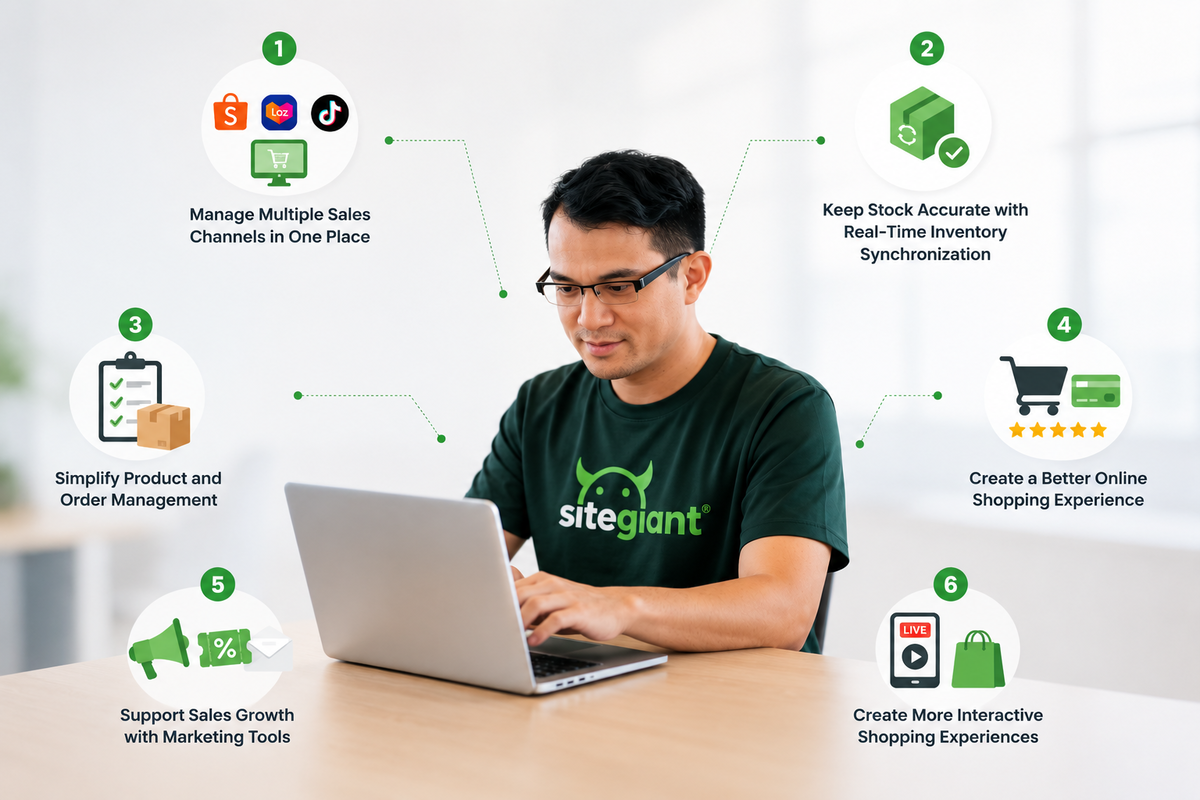
SiteGiant Webstore is designed for Philippines SMEs that want to manage online selling more efficiently across multiple channels. Instead of managing webstores, marketplaces, and daily operations separately, businesses can use one centralized platform to handle products, inventory, orders, and sales activities more effectively.
6 Key Features & Benefits
1. Manage Multiple Sales Channels in One Place
SiteGiant helps businesses connect their webstores with major marketplaces such as Shopee, Lazada, and TikTok Shop, allowing merchants to manage different sales channels from one centralized platform. Instead of logging into multiple platforms separately, businesses can manage products, orders, and sales activities from a single centralized system, making daily operations more efficient and organized.
2. Keep Stock Accurate with Real-Time Inventory Synchronization
SiteGiant synchronizes inventory across all connected sales channels, ensuring stock levels are updated automatically whenever a sale is made. This helps reduce overselling issues where a product appears available on one platform but has already sold out on another, especially during peak sales campaigns and high-traffic periods.
3. Simplify Product and Order Management
SiteGiant provides centralized product and order management, allowing businesses to organize product information, update listings once, and track orders from all channels in one place. This reduces repetitive work across multiple systems and improves overall operational efficiency.
4. Create a Better Online Shopping Experience
SiteGiant supports a complete online shopping experience with integrated payment gateways, shipping logistics connections, SEO-friendly webstores, smooth checkout flow, and customer product reviews. These features help businesses build trust and provide a more seamless buying journey for customers.
5. Support Sales Growth with Marketing Tools
SiteGiant includes built-in marketing tools such as vouchers, discount pricing, bundle deals, customer group pricing, email marketing, and wishlist features. These tools help businesses run more structured promotions, improve campaign performance, and encourage repeat purchases.
6. Create More Interactive Shopping Experiences
SiteGiant supports video commerce features such as shoppable videos and live selling integration. This allows businesses to showcase products in a more engaging way, helping customers better understand products and make purchase decisions faster.
Frequently Asked Questions (FAQ)
What is a webstore platform?
A webstore platform is a system that allows businesses to create and manage an online store. It helps merchants handle products, orders, payments, and customers in one centralized system.
Which platform is best for creating a webstore in Philippines?
There are several popular options, such as Shopify, WooCommerce, and SiteGiant. The best choice depends on business needs, especially whether the focus is on global selling, customization, or local multichannel operations.
Can SiteGiant support multichannel selling?
Yes. SiteGiant allows businesses to manage their webstores together with marketplaces such as Shopee, Lazada, and TikTok Shop. This helps merchants manage products and orders across different platforms from one system instead of handling them separately.
Do I need technical skills to build a webstore?
Most modern platforms, including SiteGiant, Shopify, and Wix, are designed for users without technical backgrounds. They provide user-friendly dashboards that make it easier to set up and manage an online store.
Why is inventory management important for a webstore system?
Inventory management helps businesses avoid overselling and stockouts by keeping stock levels accurate. Platforms like SiteGiant provide inventory synchronization across multiple sales channels to help businesses maintain better control of their stock.
Conclusion
Choosing the right webstore platform is essential for businesses that want to grow in today’s eCommerce landscape. While many platforms offer basic online store features, not all of them fully support the operational needs of modern businesses, especially when it comes to managing multiple sales channels, inventory accuracy, and day-to-day order handling.
SiteGiant is built specifically for Philippines SMEs to simplify eCommerce operations through one centralized system. It combines webstore management with multichannel selling, inventory synchronization, order management, and marketing tools, helping businesses reduce manual work and improve overall efficiency across different sales channels.
Contact SiteGiant today for a FREE consultation and find out how you can improve your inventory management and webstore performance for better efficiency and more consistent conversions.